

therapeutically gazing around (5/5)
This blog is the last in a series on the ‘Medical Gaze’. In the previous blogs I have explored how the eyes of a doctor or therapist may do different things. In the worst case, they only make patients into bodies, and states of illness into a localizable disease, as a machine that needs fixing. Those same eyes, however, may also communicate a level of presence to the suffering of the patient. But ‘gazing medically’ does not stay with doctors in their clinics.
In this blog I will zoom out from the clinical encounter. I redirect the focus to the Medical Gaze on a larger scale, as it spills over into our societies. Yes, even if you have never seen a doctor, you will have met the Medical Gaze.
You may even be gazing medically yourself.
YOUR MEDICAL GAZE
The media are one channel that can “spread” the Medical Gaze. In the US, psycho-pharmacological medication is advertised directly to ‘consumers’. Are you familiar with such advertisements? This does not happen in the Netherlands, where I am. I would assume such advertisements will make you scan your personal experiences and interiors, “am I in need of this pill?”. And when you do, you translate these experiences into a medical condition. For example, experiences of low mood can be turned into depression. Or your neighbor or the teacher of your child may suggest the label of ADHD as an explanation for your child’s behavior. And there it is: a medical condition is born, through your own eyes.
ALL-SEEING MEDICAL GAZE
There are fears that bio-medicine is reaching out too widely. It is taking more and more phenomena into its area of investigation, and presents them as amenable to medical treatment. You could say those phenomena are "grabbed out of our hands, our bodies, our lives, and put into labs, randomized control trials and clinics."
Medicalization can evoke push-back. One obvious example is the classification of homosexuality as a mental disorder in the DSM (Diagnostic and Statistical Manual of Mental Disorders) until 1973. Should a sexual orientation be classified as a mental illness that is in need of treatment? And should others think alike, medically gazing at gay people as somehow diseased? Gay rights activists in this case stood up to have the label removed.

MULTIPLE GAZES
When discussing what physical and mental ailments are and what to do with them, doctors are not the only ones sitting around the table. They may have the priority seats, but at the end of the day we are all sitting at that table.
What do you (as a yoga therapist) bring to that table?
Rokus Loopik started The Living Musuem in Bennebroek, where people with (and without) a psychiatric diagnosis are invited to make art, leaving their diagnosis behind the moment they enter the museum. A space is opened up for them to explore themselves and their experiences in new and authentic ways. This is a place where the Medical Gaze is intentionally excluded, so that other gazes can arise. This project inspires many, including health care managers, to think differently about the potential of mental health care.
I think it is important to keep inviting different perspectives to the table, and have productive cross-fertilizing discussions about important issues as disease, health, treatments, and the organization of health care.
Do you feel the need to engage in conversations about the ways in which we can perceive or treat disease, and how healthcare could be organized? Do you have a chance to do so?
You like what you read?
Sign-up for the newsletter and receive updates and more!
HI, I AM Niki

I am a research master student in Religious Studies and completed the Yoga Teacher Training with Network Yoga Therapy . In these blogs I aim to share with you some of the thoughts and reflections that I gather along the way. Please leave comments and share your thoughts!
being in seeing (4/5)
How do you establish a connection in a clinical or therapeutic encounter?
In the previous blogs in this series, I introduced the Medical Gaze as a name for the ways doctors are looking at their patients since the rise of modern hospitals. In the last blog, I spoke about doctors, and how contemporary doctors are generally expected to also listen to their patients. To a patient that thinks and feels, and is so much more than a body containing a disease.
In this blog, I return to the ‘gaze’ again. Gazing is not just looking around. It is social, interpersonal. A gaze communicates when it is directed outwards. A gaze can establish and break connections. Expect to read about:
The Medical Gaze creating objects out of bodies
Literature as a tool to connect at the level of human suffering
Gazes as communication
MEDICAL GAZE AT WORK
When preparing this blog, I came across a set of reports by students in medicine. They had read Foucault’s Birth of the Clinic, and reflected on their training in medicine so far. What do they make of the ‘Medical Gaze’? One student reflects on an experience she had while shadowing a doctor. She observed he had ‘poor bedside manners’. The student writes:
“He never really connected to the patient on a personal level or asked questions that would build an emotional or personal relationship. The doctor’s questions were intended to narrow the scope so that a determination could be made on what was wrong with the patient. In doing so, the doctor separates the illness from the person, the soul, viewing their patient not as a human subject but as an object.”
This is what the student experienced as the ‘Medical Gaze’ at work. The students weigh the pro’s and con’s of a purely biomedical approach to dealing with human suffering due to bodily ailments. And they take a unanimous lesson out of this reflection: they do not want to be treating persons as objects, once they become doctors themselves.

GAZE IN LITERATURE
A voyeuristic gaze shows up in Bernard Pomerance's play The Elephant Man. In this play we can learn, through a description, about a doctor’s enjoyment of deformity in a patient. In another work we learn about an avoidant gaze, that hinders an inexperienced doctor to connect with the feelings of his patients. In both cases, the doctor only engages with a diseased body, guided by different personal feelings and incentives.
When was the last time someone gazed at you like that?
Being looked at solely as a diseased body, affects patients in personal ways. The reality of patients’ suffering includes deeply personal, social, and cultural dimensions, that all intersect with the physicality of their ailment. When those dimensions are ignored by the doctor, this may leave patients feeling alienated. And patients may gaze back in such objectifying ways as well. The fictional patient Luisa, in the short story Outpatient, feels rebellious. She meets a doctor who refuses to really see her.
“Luisa coughs as he moves his stethoscope about her back and then her chest. His movements are all precise and quick and his touch is firm and cold. He looks into the distance, concentrating. He doesn't look at her”
As a revenge, she succeeds to hypnotize this doctor. Turning a dominating gaze back on him, she gained back control. After he obediently followed her instructions, she leaves him behind confused in the examination room.
When was the last time you gazed at somebody else like that?
Physician Rafael Campo wrote a poem, Technology and Medicine (1994), that reflects his medically oriented sensorium:
The transformation is complete. My eyes
Are microscopes and cathode X-ray tubes,
In one, so I can see bacteria,
Your underwear, and even through to bones.
My hands are hypodermic needles, touch
Turned into blood: I need to know your salts
And chemistries, a kind of intimacy
That won’t bear pondering. It’s more than love,
More weird than ESP—my mouth, for instance,
So small and sharp, a dry computer chip
That never gets to kiss or taste or tell
A brief truth like “You’re beautiful,” or worse,
“You’re crying just like me; you are alive.
At the end of this poem Rafael Campo seems to lament that he, as a doctor, never gets to tell, a ‘brief truth’ like ‘you are alive’. In this poem he expresses how his eyes, his senses, are attuned to perceive only the physical, in biomedical terms. He himself even turns into the mechanistic technology that extends the Medical Gaze, as his mouth that has transformed into to a dry computer chip.
Witnessing and recognizing gazes, where doctors learn to actually see their patients, stand in contrast to the compromising gazes. Doctors can come to look through other-than-medical eyes. They can become self-reflective, generating an awareness of their own vulnerability and suffering. They can come to allow themselves to share that space with their patients. Patients and doctors may then look at each other in a moment where both recognize each other as suffering human beings. These gazes, when they cross, communicate a level of presence. Mindful gazes, one could say.
reflect now!
In a clinical or therapeutic encounter, knowledge about bodies and disease may shape the relationship. What kind of knowledge is shaping your gaze? As a doctor, or as a yoga therapist, are you mindful of how you gaze at your patients/clients? And (how) do you bring presence and human connection to the encounter?
References
Shapiro, J. (2002). (Re) examining the clinical gaze through the prism of literature. Families, Systems, & Health, 20(2), 161.
You like what you read?
Sign-up for the newsletter and receive updates and more!
HI, I AM Niki
I am a research master student in Religious Studies and completed the Yoga Teacher Training with Network Yoga Therapy . In these blogs I aim to share with you some of the thoughts and reflections that I gather along the way. Please leave comments and share your thoughts!
good doctors listen (3/5)
Is it self-evident that doctors listen to their patients?
Last week, in my previous blog, I spoke about the change of medicine in the West. From doctors who were used to visiting patients at their homes, to the time of modern hospitals where patients were brought to a bed. In the time of modern hospitals, doctors had a chance to investigate the interiors of the body.
In this blog I trace a transformation in the expectations with regards to what it is, that doctors do.
Well, what makes a good doctor? What does the expertise of medical doctors entail? One study, a historical analysis, looks at autobiographies of doctors in the period from 1850 to 2010, in Germany and the UK. In those autobiographies doctors speak about their work. What they write is part of a process of expectation management. It reflects the expectations of outsiders who may read their autobiography.
The way that doctors speak about their profession has changed between 1850 and 2010. The change can be found in the way they speak about their patients
SILENT PATIENTS – Good doctors fix
In the early autobiographies, patients are silent. In an experimental surgery the patient may die. But what is important for the doctor to report, is that they have accumulated more knowledge about doing surgery. The project of science develops. However personally affected the doctor might have been by the patient’s death, this does not shine through in the narration of the event in his autobiography. When he writes, he only cares to mention what he thought of as the most significant goal of his work: the furthering of medicine as a rational, scientific enterprise. This is the event narrated purely through the Medical Gaze. Good doctors fix bodies. At least, at that time, people seemed to agree on that point.
VOCAL PATIENTS – good doctors listen
Now, the big change in how doctors narrate their professional work, came in the 1960s. Yes, during "the Sixties". Along with maybe the flowers or a man on the moon that may come to mind, public expectations with regard to medical doctors changed in this time. Patients resisted to being the passive recipient of treatment. They increasingly gained a voice in the medical decision making process. This is reflected in autobiographies since this time. Doctors now generally put more emphasis on the interaction with their patients. They narrate how they value and integrate their patients’ individual preferences and choices. Because now, good doctors are expected to listen, as well.

LEADING PATIENTS – good doctors co-create
In premodern Europe, a patient and a doctor would co-create a story about illness [see previous blog]. With the rise of modern hospitals, patients were brought to hospital beds and became silent. In the sixties, patients became vocal. Currently, there is a rise of patient organizations. Patients' voices become louder and louder. What is the next step? Dr. Zach Bush M.D. (also quite vocal) is a physician with a vision. He aims to create a new paradigm, where doctors say:
“You have all the health and resilience already in you, let me show you how to get there. Let me show you. Let me, as a physician, be a guide into your own intrinsic health.”
reflect now!
If you are a doctor, how do you feel about your role and your expertise? If you are a (yoga) therapist, what do you think about the therapeutic relationship?
Do you have experience with being a patient / client?
Who should be leading?
You like what you read?
Sign-up for the newsletter and receive updates and more!
HI, I AM Niki
I am a research master student in Religious Studies and joined the Yoga Teacher Training with Network Yoga Therapy . In these blogs I aim to share with you some of the thoughts and reflections that I gather along the way. Please leave comments and share your thoughts!
the body as machine: the history (2/5)
Would you say your body is some sort of machine, like an object that can break down and be fixed?
In my previous blog, I raised several questions about the relationship between yoga therapy and bio-medicine. I also gave attention to the dominant status of bio-medicine in the contemporary world. And I promised to explore some aspects of bio-medicine by working with the concept of the Medical Gaze. That concept comes from Michel Foucault, and it would be good to give a little introduction to the man.
Small warning: this blog will be a little lengthy, filled with history. A history of how the body came to be a machine.
MICHEL FOUCAULT
Michel Foucault (1926 – 1984) was an influential French philosopher-historian, you may have heard of him. Not everybody likes Foucault. You could say, he was a bit of a rebel. He was mainly concerned with questions of power in society.
Among other topics, he was interested in the history of science, such as psychiatry and medicine. He approached those topics in unconventional ways. Instead of tracing the knowledge generated by scientific endeavors over time as ideas, he looked at the changes in society that made this scientific work possible. He thereby approaches the generated knowledge not as neutral objective knowledge, but as contingent on circumstances. In other words, the knowledge does not just reflect the object of that knowledge, but also the environment in which that knowledge is produced. He was looking at the making of knowledge.
Allow me to make a little detour, and speak about Foucault’s take on psychiatry before moving on to medicine. It illustrates why he drew attention to the making of knowledge. Foucault did not like psychiatry. His critique shines through in his book History of Madness. ‘Madness’ is an ‘illness’? Foucault did not agree with this definition. He challenged this ‘neutral objective’ status of madness as an illness, by tracing the historical ‘making of’ madness as illness. ‘Madness’, is poorly understood when it is portrayed solely as an illness.
Psychiatry, over time, has generated knowledge about the conditions to which the term ‘madness’ refers (schizophrenia), but it does so through a warped lens, so to say. Warped by social and political interests, that do not necessarily serve our general understanding of those conditions. This knowledge of madness as illness can even cause harm, when brought to work in clinical practice. Foucault had taken up a profession in a mental hospital as well. He knew what was going on. And he was frustrated. He was not the first to be critical of psychiatry, and it is in this time that the anti-psychiatry movement took shape.
THE BIRTH OF THE CLINIC
When he later wrote his book on the history of modern medicine, The Birth of the Clinic, Foucault was less critical. For good reasons, as bio-medicine has brought many highly effective medical treatments. In his book, Foucault introduced the concept of the Medical Gaze. With the rise of modern hospitals in Paris in the 19th century, a new way of ‘seeing’ came along. This is a literal way of seeing: the eyes of doctors at work with their patients.
BEDSIDE MEDICINE
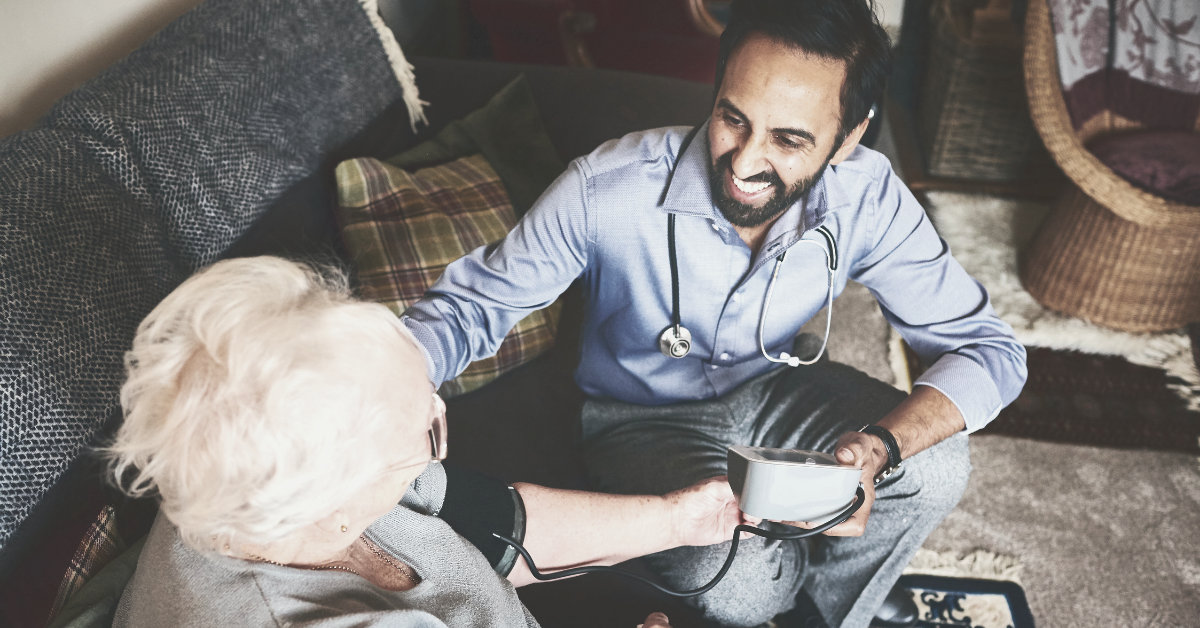
Before modern hospitals were built, the practice of medicine was organized quite differently. Medicine in the early modern period has been called ‘bedside medicine’. Doctors at this time were mainly talking with their patients. They visited their patients at their homes.
Doctors in the early modern period thought all illnesses had a single universal cause: a morbid force at work in the patient as a whole. Bodies were seen as microcosms. As doctors spoke with their patients, they sought out in which ways the patient was affected by this morbid force.
Subjective experiences and personal matters were central to the diagnostic process. Patients and those around them had a lot to say about what it was they experienced and what they needed. Doctors and patients spoke the same language and created a story around the illness together.
MODERN HOSPITALS
This changed when the first modern hospitals were built. Foucault famously stated that the central question asked by doctors changed, from ‘what is the matter with you?’, to ‘where does it hurt?’.
In the context of the modern hospital, doctors became more interested in disease in terms of a specific location within the body. In this hospital, they did not encounter a person – who is sick, but a disease – in a patient.
Doctors did not have many conversations with patients and their relatives anymore. They were now a group of doctors working in one environment, where the patient would be brought in as a rather passive bodily container of a disease.
The disease was now some sort of entity that had to be located, and this became the focus of their work. After death, a closer look in the anatomy lab – autopsy – would reveal even more knowledge about the exact location and structure of a disease.
New instruments, like the stethoscope (1816) were invented. Doctors would engage with sounds in the body, rather than with the patients themselves. Knowledge about the interiors of the body was being generated.
In those modern hospitals, the Medical Gaze was born. Locate disease, look at tissues. Observing = knowing.
However, the work of medical doctors became more and more detached from the lives and experiences of the sick persons. And doctors came to speak in a language that was largely incomprehensible to patients.
BODY AS MACHINE
The 19th century was a time in which the body came to be looked at as a machine in modern hospitals. In more recent times, the role of the doctor has been portrayed as a car mechanic. You go to the doctor, the doctor will find out which part of the body is broken, and she will fix it for you. But is this what the body is? An object, a machine?
Intuitively, many do not agree with this image of the body as a machine. Many doctors themselves resist the notion of the body purely as an object. And if you are a yoga therapist, your view of the body may be very far away from this mechanical image.
reflect now!
"GAZE AT BODY"
Through what kind of eyes do you gaze at bodies? Or otherwise, through what kind of sense do you approach the body primarily? Do you see with your eyes? Do you learn by feeling and touching with your hands? Do you learn most about the body through interoception – by bringing your attention to the internal states of your body? And what kind of body is it, through those senses, that you learn about? How would you describe the body as you know it – your body, the bodies of those who enter your yoga therapy session, and bodies in general?
References
Foucault, M. (2013). History of madness. Routledge.
Foucault, M. (2012). The birth of the clinic. Routledge.
You like what you read?
Sign-up for the newsletter and receive updates and more!
HI, I AM Niki
I am a research master student in Religious Studies and joined the Yoga Teacher Training with Network Yoga Therapy . In these blogs I aim to share with you some of the thoughts and reflections that I gather along the way. Please leave comments and share your thoughts!
worlds of medicine (1/5)
Since day and age, human beings have found ways to deal with ailments of all sorts. A rich variety of healing practices and systems have been constructed and deployed to cater to those who suffer, either physically, psychologically, or spiritually.
In contemporary times, a plurality of such healing modalities exist alongside each other. Yoga Therapy is one of those modalities. However, wherever you are on the globe right now, there is one healing system that has gained dominance in the last century. This is the practice of bio-medicine. Yoga therapy, wherever it is offered, exists in some relation to bio-medicine. Thus, it is worth talking about bio-medicine.
BIO-MEDICINE
Bio-medicine is also called ‘orthodox medicine’, ‘conventional medicine’, ‘allopathic medicine’, and ‘Western medicine’. The terms ‘orthodox’, ‘conventional’, and ‘allopathic’, indicate the dominant status of this healing system. It depends on where you are located, and what your position is, which label you use. Maybe you have a different name for it, and if so, please do let us know in the comments. The world is not a uniform place.
However, bio-medicine is the healing system that gains most recognition worldwide.
Now, I would like to ask you, is yoga therapy a form of bio-medicine, or is it different? Is it different altogether, or are there overlaps?
You may be using medication, in addition to your yoga therapy sessions. You may be a general practitioner who prescribes yoga therapy. You may be a yoga therapist who refers to medical studies to back up your practices. Just to name a few overlaps. If you have ideas about the relations, overlaps, or differences (?) between bio medicine and yoga therapy, again, please share your perspectives in the comments section down below! Let’s think this through together.
MEDICAL GAZE in medicine
In this weekly blog series (5), I will make use of a concept that I think will help to think about bio-medicine and what it does: the Medical Gaze. That is: the eyes of the doctor gazing at her patient. Expect to read more about the history of bio-medicine, doctor-patient relationships, and how we are currently gazing around medically.
To those who are familiar with the ‘gaze’ as a critical term, and may be afraid I am going to bash medical doctors: don’t worry. I will not take up this term so critically as others have done.
I have to make a small disclaimer here: I am not going to speak about yoga therapy that much. Simply because at this moment I do not know much about yoga therapy – yet. That’s what I am here for as an intern at Network Yoga Therapy, to learn about yoga therapy. Nor am I a doctor.
I have an educational background in the Humanities. From this perspective I will be discussing issues that I find interesting, that may be relevant to the growing yoga therapy network, and that I hope you will find interesting too!
Thanks for reading,
Niki
You like what you read?
Sign-up for the newsletter and receive updates and more!
HI, I AM Niki
I am a research master student in Religious Studies and completed the Yoga Teacher Training with Network Yoga Therapy . In these blogs I aim to share with you some of the thoughts and reflections that I gather along the way. Please leave comments and share your thoughts!
who am I? Latest research shows that mind and body are inseparable
Mind and body connection
Why is our body so important? Research shows that subtle shifts in our physiological bodily states, even when not perceived consciously, may contribute to our emotions and the sense of self.
“When we hear the word ‘heart’ in ancient yoga texts and the Upanishads, it does not refer to the physical organ pumping away inside our chests. Instead, it refers to the space within the centre of the chest, the space where emotions seem to resonate and the centre of our identities seem to reside in our bodies. That’s where we point when we say “I.” — AG Mohan and Ganesh Mohan
According to Western scientific tradition this does not make sense. But, as we keep learning and pushing the boundaries of physiology and neuroscience, we see the meaning of these ancient texts differently. A recent article in the prestigious journal “Trends in Cognitive Sciences” shows that our cognition is formed by the interplay between the brain and the bodily senses.
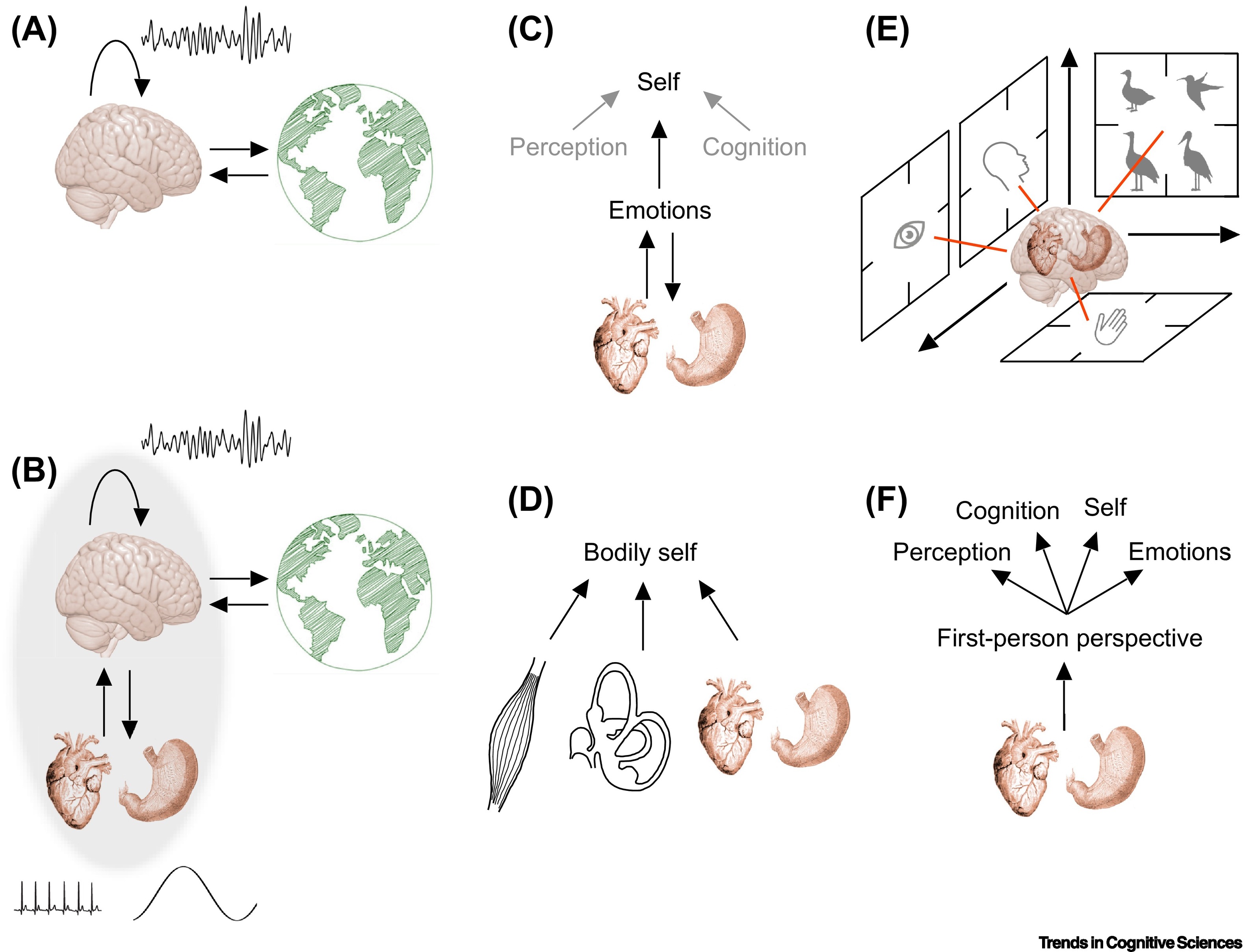
Brain–Viscera Interactions. (A) Classical paradigm of brain–environment interactions. (B) Extended paradigm that includes brain–viscera interactions, and more specifically the heart and gastrointestinal tract, which both intrinsically generate their own electrical activity and potentially contribute to brain dynamics by continuously and automatically stimulating the brain. (C) According to some theories, changes in visceral states could contribute to emotions and ultimately the self. (D) Another view holds that the bodily self arises from the multisensory integration of proprioceptive, vestibular, and also visceral ascending signals. (E) A third proposal is that neural monitoring of ascending visceral inputs is used to coordinate the different frames of reference in which sensory, motor, and cognitive information is organized, to (F) generate the first-person perspective inherent to conscious perception, cognition, self, and emotions. FULL ARTICLE HERE
Our emotional experiences are linked to changes in our bodily states. For example, the experience of fear results from an integration of an external input (something scary) and an internal physiological state of the body (such as shallow breathing, sweating, increased heartbeat). This integration happens in the brain region called the insula. Subtle shifts in physiological states, even when not perceived consciously, may directly contribute to emotional feelings.
Signals from our body also form the sense of self. Our sense of self is grounded in our sensory experiences: sight, hearing, smell, touch, proprioception (the sense of muscles and tendons), vestibular sense (the sense of balance and spatial orientation) and interoception (the sense of heartbeat, guts, temperature and other body signals). External signals shift and change constantly, and even a slight head move may change the way we see things. Internal bodily signals, even if unnoticed, are more constant. Researchers suggest that continuous neural inputs from the gut and heart to the brain generate the unique bodily-centred viewpoint: the sense of "me", “my body”, “my mental life”. This sense of “mine-ness” is central for our conscious experience.
This latest research changes our understanding of the human mind, consciousness and wellbeing, and shows a paradigm shift in Western science — we see now that the mind and body form a single system and are inseparable. Our heart can really, and not just metaphorically, carry emotions and the sense of self.
I trust that this new understanding will pave the way for more holistic approaches in healthcare — such as yoga and yoga therapy.
Yoga: embodied practice of connection
“In that heart centre, the mind is conceptualised as a lotus flower, closed and upside down. In anjali mudra, we bring the fingers of our two hands together, the base of the palms touching, with the knuckles apart from each other. The palms are not flat against each other but are shaped like the bud of a lotus flower — ready to blossom with the touch of the sunray just as our hearts are ready to open with the teachings and practice.” — AG Mohan and Ganesh Mohan
HI, I AM IRINA

I am a yoga teacher and a scientist. In this blog I write about the most recent scientific research about yoga/meditation/mindfulness. Please leave comments and share your thoughts!
Feel free to read Irina's previous blogs are here.
You like what you read?
Sign-up for the newsletter and receive updates and more!
how can we cultivate human connection in yoga?
We often see connecting to others as a psychological or mental act. But connection happens at the body level. To connect to another person, we tune our breath, voice, and posture. This tuning is controlled by the endocrine system and the autonomic nervous system and happens outside of our conscious awareness.
Sue Carter is an internationally recognized expert in the biochemistry of social behavior. Her husband, Stephen Porges, is the founding director of the Traumatic Stress Research Consortium and the founder of the Polyvagal Theory. Both are distinguished professors in neuroscience. Sue and Stephen gave keynote lectures at The Yoga Therapy Conference in Amsterdam last week. They talked about love, connection, emotional safety and trauma.
Here is what I learned, in a nutshell: i) we all long for connection, ii) connection and love can heal as medicine iii) as yoga teachers and yoga therapists, we can bring more connection into the world. Perhaps it’s the best thing we can do.
CONNECTION IN YOGA
This list is an integration of the knowledge of physiology and biochemistry of human connection, insights from other Conference speakers, and my own experience, based on the Svastha yoga vision.
- Start with an intention. Invite the qualities of connectedness and acceptance.
- Create a safe environment. Think about the space where you teach (light, colours, scent), your appearance and tone of voice.
- Integrate chanting in the class. Chanting brings us to the state of safety and calmness. By chanting mantras together with students we develop a shared intention. Just chanting Om or making a humming sound together helps us feel the presence of others.
- Teach breath awareness. Slow breathing with emphasis on exhalation is the most powerful and accessible tool for shifting physiological states.
- Integrate elements of gentle self-massage.
- Encourage students to listen to themselves in their practice. Body awareness is the key to regulating physiological states.
- Ask students to tell what they feel.
- Listen with open attention and without judgement.
- Foster social bonding, make space for tea and chats after the practice.
- Practice all these for yourself.
humans need connection, attachment and love
Humans have evolved to live in communities. “Connectedness is a biological imperative. It provides the neurobiological mechanism to link social behavior and both mental and physical health, ” says Stephen.
People without social connection are at risk of various forms of illness. Studies of the elderly show that social support is one of the most important factors in after-stroke recovery. In psychotherapy, common factors such as empathy, warmth, and the relationship between the client and therapist correlate more highly with client outcome than specialized treatment interventions.
I could not help but think about the famous Harvard Study of Adult Development, that tracked a large cohort of people born in the 1930s. Researchers collected data on their physical and mental health for over 80 years. The results showed that close relationships are what keep people happy throughout their lives. Those ties are better predictors of long and happy lives than social class, money, career, or genes. To flourish, humans need connection, attachment and love.
Love is medicine
Most of what we know about the biology of love comes from research on animals. The neuropeptide called oxytocin facilitates birth, lactation and early nurture in all mammals, including humans. It drives parental behavior, and makes mothers and fathers adore their babies.
Oxytocin is critical for connecting and bonding in both sexes, and in all ages. Increased levels of oxytocin are associated with the feeling of trust, empathy and cooperation. Sue says: “Oxytocin facilitates a sense of safety. It promotes our capacity to be close to and sensitive to others.”
Love is a complex neurobiological process. Receptors to oxytocin are found in the brain areas responsible for emotions. By acting inside the brain, oxytocin directly reduces fear and anxiety. On top of that, oxytocin works on the autonomic neural system: it downregulates the sympathetic nervous system while supporting the protective and restorative functions of the vagus.
Oxytocin is more than a “love hormone”. It appears to be one of the key regulatory molecules in the body. While it is synthesised in the brain, it has a capacity to move throughout the body. Different body systems, including the autonomic nervous system, immune system, bones and gut, are sensitive to oxytocin. It regulates basic physiological functions such as the balance of electrolytes, gastric motility and eating behavior. Oxytocin can protect the body tissues from stress and inflammation, enabling the body to heal and restore.
Love is medicine.
Yoga: embodied practice of connection
Stephen Porges has coined the term “neuroception” – the unconscious ability to quickly adapt bodily responses to danger or safety. When we detect danger, we shrink and tense, our breathing becomes shallow, our heart beats faster, and our voice pitch becomes higher. On the other hand, when we feel safe, we release muscle tension, soften the breath and the voice, and tune in for connecting with others. All these changes reflect a shift in the state of the autonomic neural system.
While these reactions are outside of our awareness, we can consciously use posture, breath, and voice to get to a state of safety. That’s what we do in yoga. Yoga practice gives us a unique way to reset our physiology to experience safety. Stephen says: “Yoga is a ‘family’ of neural exercises regulating physiological state”.
HI, I AM IRINA
I am a yoga teacher and a scientist. In this blog I write about the most recent scientific research about yoga/meditation/mindfulness. Please leave comments and share your thoughts!
Feel free to read Irina's previous blogs are here.
Feel free to share your story, question or feedback below this post, we love to hear your voice too!
You like what you read?
Sign-up for the newsletter and receive updates and more!
true consent is justice in action
This blog was written by Theo Wildcroft and was originally published on her website. We post it here with the author's permission, because we love it.
What worries me most about yoga as an adjunct therapy right now, is standardisation, and the rise of the expert voice. I’m hearing about more and more trainings in trauma-sensitive yoga in particular, that are giving teachers alarming advice.
I meet teachers who tell me that after a few days of training, they know what I need as a survivor of trauma.
They tell me that survivors will never close their eyes, but that you, the teacher, should close yours and never open them during teaching.
They tell me that survivors should never be touched.
They should never do yoga nidra.
They should be told how to breathe – to impose a specific, counted ratio of inhalation to exhalation.
I checked with others to be sure, and most of the survivors I asked would never return to classes that followed one or more of these rules. Now I know that working with a highly vulnerable population with active PTSD is different from making a general class a little safer. But given that the only common symptom of trauma is the loss of personal agency, yoga teaching that is not based on co-constructed content can never be appropriate.
In short, I’m hearing more and more stories of survivors having adverse reactions in yoga, and being told ‘but this expert told me it was safe’. And I want to know why those trainers aren’t telling teachers to ask their students about what does and doesn’t work for them.
My only formal treatment was three years of talking therapy in my early 20s. This did nothing to regulate my nervous system. I found my way by instinct into dance and martial arts, contact improvisation and yoga. And although I wouldn’t recommend it, I also found MDMA and psilocybin, and I credit all of these as part of my personal recovery.
So now that we are seeing research that explores the use of movement and mindfulness, psilocybin, and MDMA in the treatment of trauma, I need to remind you that survivors have been using these techniques for effective recovery for much longer than therapists and yoga teachers have been reading Bessel van der Kolk.
To heal all we need:
agency over our own choices to create…
individualised strategies to gather…
personalised resources for…
self-regulating our nervous systems with…
time and space to integrate them.
At the heart and centre of what we do, we need to start teaching yoga as a therapy of empowerment based on the principles above. We need to flatten our hierarchies when we come together in practice, celebrate differences, and ask what our students need from us, and what they already know how to do. It’s about a quality of relationship far more than the tools we can offer. Yoga is a toolkit for liberation, that has too often been appropriated both for oppression, and for well-meaning disempowerment.
My trauma, my survival, my healing, is not a resource for you to extract. It is inseparable from the relationships that shaped me, and continue to hold me.
Just as yoga teachers are turning to a post-lineage model, not to replace traditional teachings, but to build a safer context around them, perhaps we need to reclaim yoga therapy from medicalised, standardised spaces. We need to connect in shared authenticity, and humility, meeting in the practice as equals, not just experts and clients.
It will be an imperfect, flawed experience. We will continue, in our enthusiasm, confusion and fatigue to make assumptions about who we can hug, and who wants us to pat them on the shoulder after class.
Worst of all, there may be people waiting to take advantage of our vulnerability to abusive ends. When this happens, may our policies and practices, our culture and our community, be there to help us heal and learn from these mistakes. And may none of us be too badly scarred in the process.
Above all, consent is not a shield we use to protect people, or a tick box to be checked before the work can begin. Instead it is the key to the many ways in which we can heal and evolve together
True consent is justice in action
You like what you read?
Sign-up for the newsletter and receive updates and more!
HI, I AM Theo
I'm a yoga teacher based in north Wiltshire working for a more sustainable relationship between our many selves, the communities that hold us, and the world that nourishes us. I'm a lover of vulnerable people, of wild things and wild places, of all our ancestors, and of the simple miracle of life itself. I am particularly fond of rhythmic movement and gentle devotion. I’m also a doctoral researcher investigating the democratization of physical practice, how it evolves, and why it matters. I blog and write articles on this, on social justice, on hope, and on untold stories.