

what is yoga therapy?
Yoga, specialized yoga and yoga therapy: isn't it all the same?
We are dealing with overwhelming pressure in life — we live in a world full of information and yet we hunger for wisdom. Loneliness, stress, chronic illness and mental health problems have been growing to a point of crisis. Disappointed by existing systems many are waking up to the idea that there is more to life and healing than the health strategies of the past decades. A more natural, conscious and empowered way.
Although yoga as a practice is therapeutic, there are differences between yoga teaching and yoga therapy. Between a yogateacher and a yogatherapist and obviously the classes and sessions are different. This post covers these differences and adds explorations of the definition of yogatherapy. Don't forget to share this post with your friends and colleges if you like it!

YOGA IN A NUTSHELL
According to the Yoga Sutras, the aim of yoga is to calm the fluctuations of the mind and achieve optimal balance in body and mind. Yoga, including the 8 fold path, is a complete system that can be efficient for mental well-being as it teaches discipline, positive and responsible thinking and acting, self-reflection, physiological regulation, behavioral action and change and improved tolerance. Concentration, compassion and mindfulness are trained. But it can also be seen as nourishment for the mind which can lead to personal development and well-being.
Yoga is not just about asana (postures) unlike what we often see in modern yoga presentations. It is essential to keep the bigger picture in mind. There are traditional concepts and frameworks from ancient scriptures that comes with tools and ways to practice. There are modern insights that back up the classic knowledge and we have our own experience that is the result of practice what we study.
There are different approaches to yoga, which can accentuate a slightly different aspect of the broad spectrum of yoga concepts, or models and yoga practices. The Svastha approach offers a large and detailed framework to work with these concepts in a logic and personalized way. This is not another 'brand' of yoga but an approach that fits any type, style or brand of yoga. This can be the first step towards yoga therapy as well. Yoga is still booming. Perhaps you noticed this yourself, yoga has become one of the fastest-growing wellness practices in the past decade.
As we can see, yoga was already booming; a self-regulatory, complementary and integrative health care practice, pursuing awareness and optimal health. It offers a holistic view of life and health, in which a client is central and is supported in finding optimal balance on a mental, physical and sense of purpose. It has basically no side effects (unless it is practiced incorrectly) and gives rise to a series of positive changes. Ultimately, a person applies the yoga him,- or herself, and he or she is his or her own therapist. Besides that, we can even — unconsciously — harm our students. Much reason to get trained well. For that reason, our teacher trainings are trauma informed and thus safe, by nature.
HOW MANY PRACTICE
- Worldwide, approximately 300 million people regularly practice yoga.
- Approximately 36 million Americans practice yoga regularly.
- In the past 5 years alone, yoga practitioners in the U.S has increased by over 50%.
- The number of men practicing yoga went from 4 million to 10 million between 2012 and 2016 – an increase of 150%
- 34% of Americans are likely to try yoga for the first time in the next 12 months.
- Currently, 1 in 3 Americans (30%), have at least tried yoga.
- 2019 statistics list yoga as one of the top 10 fitness trends in the world.
- By 2020, the number of U.S yoga practitioners will grow to over 55 million.
Sources here
MOST COMMON TOOLS
Tools are there to use in practice. Yoga is an unique method by combining all these tools in one simple practice that can be repeated over and over again to anchor in our being. The results of our practice will be reflected in our lives.
- Asana (working with body and movement)
- Pranayama (working with breath)
- Mantra (working with sound)
- Meditation (focussed attention of mind)
- Mindfulness (sensory awareness)
- Bhavana (feeling)
- Personal Reflection
- Self study
- etc
EFFECTS OF YOGA ON (mental) WELLBEING
Since yoga focuses on mental development, it's not surprising that the most common findings from yoga research show an improvement in mood, reduction in stress, and improved quality of life. This appears to be true according to research into the therapeutic role of yoga in, among other things, mental illness, cancer, chronic pain and diabetes. Although the yoga system is in principle not intended as a way to alleviate (mental) health problems, it still has great added value in the complementary view of health problems.
There are a growing number of neuro-scientific findings that praise the use of the body in psychological therapy. Many different attention- and movement-oriented approaches are used too, as well as yoga, which included all those assets and yes, positive results are measured. Yoga is increasingly recognized for its beneficial effects on mental health and is receiving particular attention in the therapy community that treats trauma and PTSD. Research shows that yoga can not only help to prevent mild psychiatric problems like reducing stress., but can also offer support or a solution for ADHD, sleeping problems and schizophrenia.
Regular yoga practitioners reported the following when surveyed about the effects of yoga on emotional well-being:
- 86% report a reduction in stress.
- 69% report a positive increase in temperament and mood.
- 63% report yoga mentally motivates them to exercise more.
- 59% report an improvement in sleep quality and quantity.
- 86% report an overall improved sense of mental wellness and clarity.
- 28% report a noticeable reduction of depression symptoms.
- 79% report a feeling of closeness with their community and wanting to give back.

yogatherapy in a nutshell
Yogatherapy is yoga. But yoga is not always yogatherapy. An ideal modern definition of Yogatherapy should be based on a common, logical understanding of the application of yoga. An example definition of modern yoga therapy is “Yogatherapy is the process of empowering individuals to progress toward improved health and well-being through the application of the teachings and practices of Yoga.” (IAYT)
The word empower here is important, because a key aspect of yoga `(as well as any other therapy) is the active participation of the client in the process of therapy. The tools of Yoga require that the person make an effort.
reflect now!
'AN APPROPRIATE DEFINITION'
'It is sometimes suggested that in the context of yoga, phrases such as spiritual well-being be added to the definition of health and the aims of yogatherapy. Apart from being vague, this is incorrect from a classical yoga perspective. The spirit in yoga would be the seer, perceiver, or consciousness. There is no well-being for the spirit in yoga. It is a core concept in classical yoga that the consciousness or spirit is beyond change, and is thus always well; only the mind may be disturbed.
Similarly, adding moral or ethical well-being to the definition of health is also incorrect from the view of yoga; yoga does not preach morality or ethics. The yamas and niyamas, the first two of the eight limbs of the Yoga of Patanjali, may appear to be moral or ethical injunctions, but they are not. They are personal disciplines in action, speech, and thought. The practitioner chooses to follow them because they are indispensable in progressing towards the goal of yoga.
In summary, adding spiritual, moral, or ethical well-being to the concept of health in yoga conflicts with the fundamentals of yoga psychology. Words such as attitude, balance, or vitality have a positive, feel-good meaning, but, on reflection, we can see that they are also inappropriate in a definition of yogatherapy. If these words are acceptable in a definition, so are many others, such as emotional wellness, steadiness of mind, and energy.
Such words only raise more questions: What is improvement in attitude? Is it certain that vitality or energy level is a marker of underlying health? For example, we see people who apparently had great vitality suddenly suffering a stroke. The point is that these words are vague and arbitrarily chosen, and the ancient texts place great emphasis on precision in a definition.'
(from 'Exploring Yoga as Therapy' by Ganesh Mohan — full article here)
'Adding spiritual, moral, or ethical well-being to the concept of health in yoga conflicts with the fundamentals of yoga psychology' — Ganesh Mohan
THE DARK NIGHT OF THE SOUL, PREPARING CRISIS
terrapy | integrative yoga therapy
complementary and integrative health
Yogatherapy is a form of complementary or integrative healthcare, based on the ancient wisdom and practices of yoga, integrated with scientific knowledge. It has sparked the interest of the psychological and bio-medical communities as a stand-alone or complementary therapy for psychological problems because it offers a bio-psycho-social-spiritual model which is increasingly appreciated and seen as highly effective in treatment. It has been shown to be more effective than treatments that target just one aspect of the person.
professionalization of yoga and yogatherapy
There are many different ways to define what yoga is. As such, it has become an obstacle to the professionalization of yogatherapy. However, a definition alone is not enough. An explanatory framework for yogatherapy can be a key to understanding and therefore a better access to the use of yoga as a unique therapeutic intervention. Which accreditations are needed, is at the moment depending on the professional background of the practitioner, the country he or she is living and the regulations for practice in that country. Yogatherapy is a growing profession and organizations are blooming in many countries, as well as the global yogatherapy consortium.
the yoga student
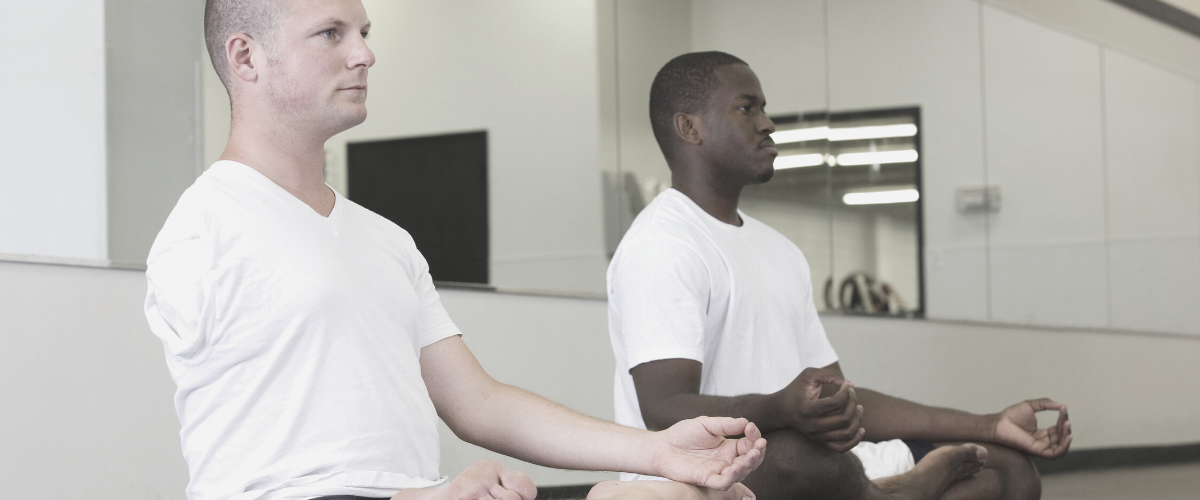
There are many reasons why students go to a yoga class or seek out private yoga instruction. To make the right personal decision, students look seriously at their intentions for seeking out yoga education, yoga instruction, or yogatherapy. Yoga provides the tools for a process of self-investigation and self-development that ultimately guides practitioners toward a realization of the Self. However, the general public often sees yoga as a system of exercise. Students most often go to a yoga class to exercise in a venue with a like-minded community. Those who see that yoga is more than just exercise may look for instruction to explore its other aspects, such as pranayama or meditation. Regardless of the intention, they will gain some benefit by learning and practicing yoga.
VERSUS THE YOGATHERAPY CLIENT
When clients seek out a yogatherapist or a therapeutic group, they are usually coming to get help with or relief from some symptom, pain or health condition. Their main intention is not to learn yoga and in many cases, the instruction focuses on their complaint and how the yoga techniques can help them feel better or improve their function, rather than on the yoga techniques or methods of yoga practice. Clients can be yoga practitioners and seek holistic support that has its root in yogic philosophy. Others have no idea and simply seek relief, trying different ways including yoga therapy.
Yogatherapy is the process of empowering individuals to progress toward improved health and well-being through the application of the teachings and practices of Yoga — The IAYT Definition

THE YOGA teacher
There are as many different teaching styles as there are yoga teachers! Some teachers focus primarily on asana instruction, guiding students through their practices and adjust students in their practices. Often the teacher is guiding a group of students through a series of practices and includes a theme of point of focus for them. In a way, a teacher is a presenter and it's about what to do in a class. The scope of instruction can range from asana to pranayama to meditation, but instructors using their style will guide the students in their practices.
Other teachers empower students to guide their own experience, whether they are practicing alone or in a group setting. They seek to educate their students in how to practice. Good teachers are able to choose appropriate practices that meet the interests and abilities of their students. Whether their style is instructional or educational, yoga teachers focus on teaching the various yoga methods in a correct and appropriate way.
vERSUs THE specialized YOGA teacher
Some yoga teachers offer yoga classes for individuals or groups of people with specific conditions, often as a result of their own life experience around these conditions in their personal, professional lives. Common examples include yoga for pregnant women, yoga for trauma or burn-out, yoga for cancer survivors, yoga for veterans and yoga for amputees. A good yoga teacher must learn the contraindications for working with people that have these conditions and respect those contraindications while teaching the students appropriate yoga. The teacher is skilled to teach students yoga in a safe way respecting their health conditions.
VERSUS THE YOGATHERAPist
The yogatherapists is a yogateacher that developed him or herself further and fundamentally focus on their clients’ needs, helping a client restoring optimal balance in their whole system. Their job is to understand why their clients have come to see them and determine what they can do to support them. Yogatherapists are trained to assess clients through listening, questioning, observing, and if needed, appropriately touching with consent. Therapists look for ways to help their clients reduce or manage their symptoms, improve their function, and help them with their attitude in relation to their health conditions.
After assessing clients, therapists establish appropriate goals together with the client, educate the client where needed, develop a practice intervention, teach clients to practice that intervention, reflects and evaluates at the right time and supports a client to integrate yogic concepts into daily life. A yogatherapist may choose yoga techniques and possible merges those with other techniques (i.e. journaling, reflection, movement etc) in relation to how they will specifically benefit individual clients.
YOGA THERAPY ONLINE
BOOK YOUR SESSION HERE

The (specialized) yoga teacher is skilled to teach students yoga in a safe way respecting their health conditions.
THE YOGA class
You probably agree with me when I say that students often experience great and even therapeutic benefits from their yoga classes, no matter which type of class they are attending because of the therapeutic potential of yoga, so what is the distinction between a yoga class and a yogatherapy session?
Yoga teachers may offer a variety of yoga classes inspired by different styles or branches of yoga, adding different themes or focus points for example connected to the seasons. Yoga teachers teach group classes or sessions for individuals with or without specific conditions like yoga for pregnant women, yoga for heart patients, yoga for cancer survivors etc. In these classes, good yoga teachers learn the contraindications for working with people that have these conditions and respect those while teaching the students yoga. The intention in these types of classes is to teach these students how to practice yoga safely respecting their health conditions.
VERSUS THE YOGATHERAPY SESSION
Generally speaking, the intention in yogatherapy sessions for individuals or groups with specific conditions changes. There is a broad spectrum of what a yogatherapy session looks like, but in general imagine an intake and assessment where therapists will often focus on the specific symptoms that trouble their clients and identify methods to help them manage those symptoms.
Examples include helping clients with pain management, fatigue, or sleeplessness. In addition, the therapist's role is to empower clients to take a more active role in their self-care. Besides teaching yogic techniques its the therapist’s job support clients to overcome their challenges and gain independence. This asks for a different focus, a different type of education, and a different skill set. A trained (care-) professionals often has already some of the skills a yogatherapist has but may needs to develop the yoga philosophical and holistic perspective of optimizing health.
Although the distinctions may seem subtle in some cases, it is important for the yoga student and the yogatherapy client to be clear about their intentions when seeking out yoga professionals. It is also extremely important for yoga professionals — (specialized) teachers, therapists or care professionals who integrate yoga — to be clear about the intention and orientation of their work, honest about their level of training and understanding, and realistic about their skill sets.
THE DARK NIGHT OF THE SOUL, PREPARING CRISIS
terrapy | integrative yoga therapy
3 important keys for amputation and yoga therapy
dealing with PHANTOM LIMB SENSATIONS through compassion based yoga therapy
by Mark Workman
This is an updated post (originally from 2018), about the conversation we had with Mark Workman from Cobar, New South Wales, Australia already in 2018. We thought it could be still interesting today as the field of yoga therapy is emerging fast. Mark has written specifically about his story on limb loss and restricted mobility and yoga in the past and he shares his own experience of dealing with phantom limb sensations.
'In amputation, although the limb is gone, the nerve endings at the site of the amputation continue to send pain signals to the brain that make the brain think the limb is still there. Phantom limb pain can be mild to agonizing and even disabling for some. And it may lead to a lifelong battle with chronic pain. And it may lead to a lifelong battle with chronic pain. Women who have had a breast removed because of breast cancer may also feel phantom pain.
Some people experience other sensations such as tingling, cramping, heat, cold, and squeezing along with pain. You can feel any sensation in the portion of the limb that was removed (your "phantom" limb) that the limb might have experienced before it was removed.' (source)
PHANTOM LIMB PAIN
Phantom limb pain, as it is often called, frequently torments amputees. It is not always painful, an itch that you can’t physically scratch can drive you crazy and make it impossible to focus on anything. A friend of mine had his arm amputated and felt as though the limb was twisted into an unnatural position. While it wasn’t painful it was extremely distressing. What follows is my own experience of dealing with phantom limb sensations.
Yoga is not the standard method used working with amputees, but read on and you'll find out why it deserves to be added to every holistic recovery plan, especially after reading Mark's story. Mark speaks of limb loss and restricted mobility and how this is treated symptomatically very often, avoiding the topic of accepting the reality as it is as well as offering very useful ideas for yoga,- teachers and therapists to work with.

yoga CITTA vrtti nirodah
Dealing with my personal issues as well as assisting others is firmly based on the Yoga Sutras. Nothing draws attention to the fact that identifying with the body or the mind is the path to suffering more starkly than losing a bit of your body and storm of emotions that goes with it. The Sadhana Pada – the second chapter of the Yoga Sutras — is my text book for dealing with all of these issues.
It requires considerable reflection and skillful means to guide a person so they see that their life isn’t defined by their body or the various thoughts that appear in the mind from time to time.
Now, I can write in general terms about yoga, limb loss and restricted mobility but not much good will come off this without explaining how to apply it'. Nor do I want to give the idea that it is possible to avoid any reality.
That's why I'd like to start with reflecting on Patanjali's yoga sutras and especially the verse: yogas citta vrtti nirodah — ‘Yoga is stopping the whirlpools of the mind’ (My own translation). I think that sutra is tattooed on the back of my eyelids now. Everything I do is based on it. This is my bias and what I write should be understood from that perspective.
3 IMPORTANT KEYS FOR AMPUTATION, PHANTOM LIMB SENSATIONS AND YOGA THERAPY
The experience of phantom limb sensations are related to neural pathways. Pathways are being re-established after limb loss but without help will often re-establish existing patterns i.e., if you don’t do something to guide the process you’ll get what you had before – but then without the matching limb. This may cause confusion and frustration. Important keys to start with:
1 :: Start early, the sooner after amputation the better
2 :: From denial towards acceptance
3 :: Work with kindness and friendliness (towards the whole self, including the amputated limb)
Start early
Soon after my leg was amputated — which showed to be the ideal time — I started my yoga practice again. Since then, I have adapted the practice for other people too and the key to adaptation is to get acceptance of the residual limb (stump).
ACCEPTANCE
I would be careful not to set too many expectations, especially for people who have phantom limb sensations lasting longer than 8 months after an amputation. In that case, it is likely to takes longer to deal with acceptance because the neural pathways are more established.
KINDNESS
A lot of issues start because people are in denial about their amputation and don’t ‘make friends’ with their amputated limb. Rubbing it and looking at it are quite important. Often it is the sight of a newly amputated limb that puts people off. I understand why, it is weird, but it is important to accept your body’s new configuration by both looking at it and feeling it.
breathe first, mindfulness and compassion follows
So… having made friends with what is left of my right leg this is the process that I used. It worked for me very quickly and continues to work in the very rare cases when I have some phantom sensations. They usually occur when my prosthesis presses on my leg in an unfamiliar way when it is tired and sore.
First I regulated my breathing so there could be a bit of focus. No need to get too picky about precise technique but extended exhalation and conscious inhalation matter. A 1:1.5 ratio is sufficient. The focus in the instance is the residual limb. Notice the change in sensation between inhalation and exhalation. People often use the language of breathing into their residual limb which is fine as long as it isn’t taken literally.
The next step is mindfulness, to look at the limb and see what it really looks like, visually locating the change of sensation between inhalation and exhalation. In my case the obvious thing to see is that there wasn’t a foot regardless of what I might have been feeling. However, the residual limb does have feelings that are consistent with what it is really like. Focusing on those feelings is the point of this step.
While focusing attention on sensations in the residual limb I felt it with my fingers until the place where the phantom sensation was actually coming from was located. It might be sensitive or the phantom sensation simply changed when a certain spot is pressed. While I was looking at the spot on my leg and pressing it gently so I focused on the feeling in that precise location I simply told myself, 'The feeling is here, there is no foot.'
I did so with compassion and a degree of humor and I have found that matters to other people as well. The end result is to have a response rather like ‘Oh, the feeling is here, silly'. It definitely doesn’t help to get serious and morose about it. While people do have to go through a grieving process regarding their old limb, this process requires acceptance. I found that doing this practice every time I felt a phantom sensation stopped them very quickly. After two weeks I had no serious phantom limb sensations. This is important if one wants to be able to do what nurtures the soul.

from pain, fear and denial management
This is interesting for people, especially care and yoga professionals, because there aren't many opportunities to hear about the early stages of limb loss. This is useful both for understanding as well as some insight into the adaptation of techniques for mental focus that I used to reprogram the associated neural pathways.'
'The response begins with this saying from Krishnamacharya 'Teach what is inside you, not as it applies to you, to yourself, but as it applies to the other'.
An example of applying that from my experience is managing pain. Pain is worse the more afraid you are. Naturally, Pranayama helps greatly and if you can suppress the activity of your sympathetic nervous system sufficiently even extreme pain becomes just an unpleasant sensation. Now I am across Pranayama but a person I am helping at the moment, almost certainly isn't.
It is usually not possible to get someone to the point where they can manage pain by a direct approach, i.e., 'Do this and you'll feel better'. Pain is complex. So working on reducing fear — which can approach blind panic — is an important beginning. That requires an understanding of what triggers the fear for a person as well as finding out what engages them, to decrease the intense focus on themselves. Often the care for their children, grandchildren, dog, whatever can start the process.
Once there is a purpose that a person really cares about it is possible to teach them some breathing techniques to reduce the experience of pain. They will need support because it may hurt more at first as their existing way of coping switches off and the new method begins. They may be going from denial to management and that is an important step to help them through. Gently bringing the practice back to its purpose e.g., to be able to support their grandchildren as they grow up, helps people stay in track and get past difficult bits.
It is not always painful, an itch that you can’t physically scratch can drive you crazy and make it impossible to focus on anything
Mark Workman
from human to human
In circumstances like that, caring for another person as a human, not so much as a therapist, is of great value. Being the wise educated therapist often puts a barrier between you and the person you are working with.
So along with teaching what is inside you as Krishnamacharya counsels, I would add another saying. 'People don't care how much you know until they know how much you care'. And, there is no such thing as an uninterpreted fact, is a lesson that I have never forgotten.
As a therapist dealing with limb loss and restricted mobility you are faced with that fundamental issue all the time. While all of our work to relieve pain, assist with methods to strengthen, straighten and balance the body or reduce stress and anxiety is important, in the end our goal has to be to help people have a full life and that is only going to happen if the fullness of life isn’t depends on a normally functioning body and old life habits.
To put it simply and to avoid getting mystical about limb loss etc., I have to define my life as an amputee, the fact that I am an amputee mustn’t define me. It is our job as therapists to be our clients' companions on that journey. And we have to face the fact that we can’t make that journey for them any more than we can walk for them.
It can be frustrating and at times heart wrenching, especially when working with people that have bought into being disabled. But in the final analysis we have done our job when our clients can work out life for themselves and they don’t need us any more. It reminds me of story about a young monk who was always at his prayers.
The abbot of the monastery asked him: “Why are you bothering God all the time?”
The monk replied, “It was you who taught us that God is our father.”
“Yes” replied the abbot, “but a father isn’t someone you lean on, a father is someone who teaches you how not to lean”.
Perhaps it is the same for therapists.
Thank you,
Mark.
Do you like what you read? Integrative Yoga Therapy offers an universal system that is easy to implement and complements any other care or treatment plan. If you wish to learn more about our yoga program or learn more about yoga therapy by reading this article.
You like what you read?
Sign-up for the newsletter and receive updates and more!
avahana mudra
Avahana mudra
The avahana mudra is an ancient practice used in Vedic rituals to invoke the divine. Personally, I use it to invoke my light or my personal truth from within. It helps me to let go, pay attention, be more focused, and avoid “leaking” my energy. This mudra was taught to me by my teacher A.G. Mohan, who was a student of Krishnamacharya from 1971 to 1989 and who co-founded the Krishnamacharya Yoga Mandiram in Chennai, India, and by his wife Indra Mohan (also a student of Krishnamacharya).
The intention of avahana mudra is to ask what I do not need to be removed. When I practice it, that which clouds my thoughts and emotions is removed so that the light within me can shine forth. That light within guides me in the right direction, and this mudra helps me to connect with that inner guidance. As with any other yoga practice, the experience of this mudra should be sattvic (i.e., marked by the qualities of sattva): clear, illuminated, related to light. In other words, it should bring brightness in the mind.
This mudra consists of a simple series of hand movements:
I start with my hands in anjali mudra (1).
Then, I open my hands like a bowl (2) while chanting my mantra, out loud or internally. As I chant my mantra, I ask for something that is not based on a “wish of getting”—trusting (and reinforcing) my belief that everything I need is already present inside me.
After, I bring my fingers to my sternum (3), where I touch the spot I would point to when indicating myself to another. This point on the body is called hrdayam, or “heart center.” This is the place I bring my attention to, again and again, as I continue with the mudra and my mantra. Then, after a couple of breaths here, I bring my hands back into anjali mudra, as I invoke a sense of gratefulness for all that is happening in my journey toward my personal truth.
This mudra connects me to myself, because I point to the spot I would use to indicate myself to someone else, while the accompanying mantra calms my thoughts and gives me a break from a chaotic mind. Together, they offer me space to breathe again and be.

When mind is clouded
This mudra is helpful in challenging times, when your mind is clouded, when your body feels heavy or ungrounded, when flow is lacking, when you feel it’s harder to recover from difficult emotions or to connect with yourself and others, and when you find yourself getting lost in thoughts or having a hard time changing behavioural patterns or making choices. All of the above conditions make up what is called a state of asvastha.
This state is the opposite of svastha, a state of well-being and of balanced mental, physical, emotional, and spiritual health. In svastha, which ideally would be our natural and habitual state, we experience our true nature and find it easier to tune in to ourselves and to recognise the path toward balance and stability. Regularly practicing avahana mudra with the right intentions can help us reach a state of svastha by replacing negative mental impressions or habits (samskaras) with positive ones.
Regularly practicing avahana mudra with the right intentions can help us reach a state of svastha by replacing negative mental impressions or habits (samskaras) with positive ones.
I am a mother, a yoga therapist, and a registered nurse, and sometimes it’s hard to balance all the tasks I need to do. This mudra reminds me to slow down and pause—to breathe and feel again, especially in more challenging times. I use this mudra before my asana practice, oftentimes during my asana practice, and also before meditation.
However, avahana mudra need not be practiced only when times are challenging; it can be practiced anytime, by anyone. The more we practice it, the better it will enable us to reach and maintain, even in difficult times, the calm, clear mind and connection to our inner selves that characterize the state of svastha.
You're invited to try it yourself! I use the mantra OM MITRA NAMAH when I bring my fingers towards my sternum and I repeat the practice 6 times before just sitting in silence for as long as it feels good. Let me know your experiences or questions in a comment below, I am happy to answer it!
Love, Anneke
This article originally appeared on Yoga International.
I believe mental health and wellbeing requires an empowered, holistic approach. Integrated Yoga Therapy is such an approach. A sustainable life philosophy for mental health, emotional wellness and spiritual freedom.
Anneke Sips (RN, C-IAYT)
HI, I AM Anneke

You are your own therapist, and I am here to support you!
As a sustainable life philosophy for health and wellbeing, yoga and meditation offers great tools.
I hope to inspire you improving your habits, find a state of optimal balance and live your happiest and healthiest life!
Read Anneke's previous blogs here.
BOOK (YOGA-) THERAPY OR COACHING
Online or in-person