

yoga for 60+: what do we know from research?
Yoga and aging
40% of adults in high-income Western countries do not engage in sports or any physical exercise. Inactivity rises with age – we tend to move less as we age, and this increases the risk of chronic disease and disability. To be healthy and independent in older age we have to stay active and move. Is yoga a good choice of physical activity and how it compares to other forms of fitness?
FACT#1 YOGA CAN SLOW DOWN AGING
Even a mild asana practice improves strength, flexibility, balance, and mobility over time. Research shows that gentle stretch and tension in regular yoga can slow down age-related muscle loss. On the other hand, breathing and meditation practices help to reduce stress and improve the regulation of emotions. These positive changes in the body lead to a delay in cell aging - read more about it here.
FACT#2 ANYBODY WHO CAN BREATHE CAN DO YOGA
Yoga might be a good choice of exercise in older age because it can be modified for any physical limitation. Clinical applications of yoga include severe motor conditions such as multiple sclerosis and stroke. A clinical trial published last week investigated the effects of yoga in people with Parkinson Disease, including participants who needed an assistive device to walk. The yoga program was as effective as stretching and resistance training in improving mobility, with the additional benefits of a reduction in anxiety and depressive symptoms.
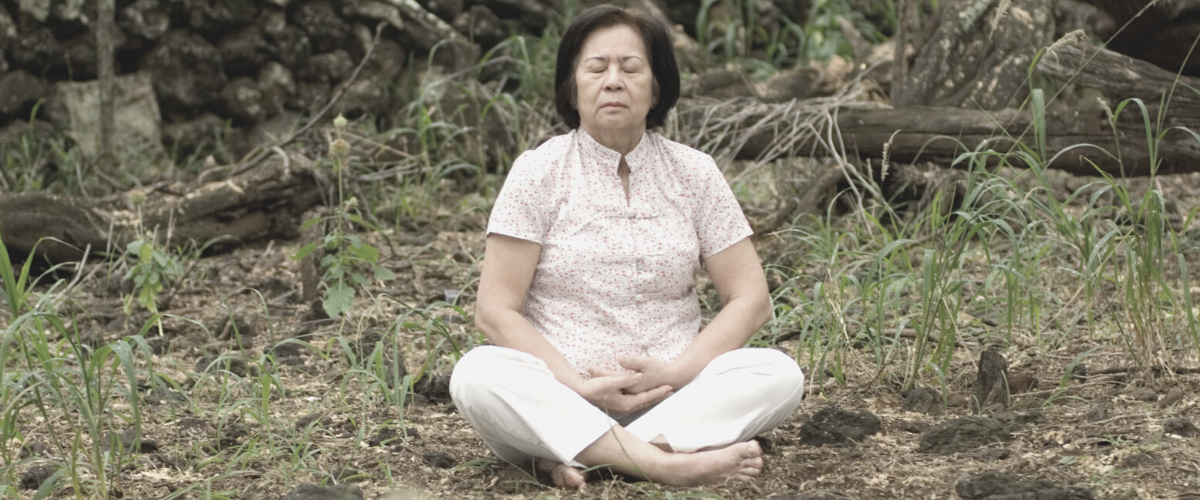
FACT#3 YOGA IMPROVES BOTH PHYSICAL AND MENTAL HEALTH IN 60+
The first meta-analysis of randomized controlled trials to evaluate the impact of yoga on mental health in older adults was published in 2018. The article reviewed the results of 12 previous experiments, with a total of 752 participants. People aged 60+ years who practiced yoga were compared to those who did not engage in any exercise. The analysis showed that yoga improved both quality of life and mental wellbeing.
A newer meta-analysis that came out last week compared yoga in the older population with other physical exercises (walking, chair aerobics). The authors looked into 22 previously published randomized controlled trials, with over 2000 participants. While all types of exercise improve balance, flexibility, and general wellbeing, yoga also reduces depression scores.
The effects of yoga on mood and emotions are likely explained by the combination of mindful awareness, breathing, and the attitude of self-compassion. Besides, yoga classes are typically social environments that promote human connection, which is essential for mental wealth.
FACT 4# YOGA IS INCREASINGLY INTEGRATED INTO HEALTHCARE
All studies above have found significant statistical effects of yoga practice, but the effect sizes were often not huge. This means that while we can expect yoga to improve the quality of life in general, it might work better for some practitioners than for others.
Yoga is not a miracle cure, but a sustainable lifestyle or a supportive care modality for all ages.
The effects of yoga might be similar to those of other mindful movement practices, such as tai chi or qigong. According to a recent report in the American Journal of Public Health, the use of these techniques in the US has increased from 5.8% in 2002 to 14.5% in 2017, and an increasing number of practitioners are being referred by their medical doctors. Integration of various holistic approaches in healthcare is happening slowly. But is absolutely necessary, given the aging of the population and the increasing pressure on healthcare providers.
You like what you read?
Sign-up for the newsletter and receive updates and more!
HI, I AM IRINA

I am a yoga teacher and a scientist. In this blog I write about the most recent scientific research about yoga/meditation/mindfulness. Please leave comments and share your thoughts!
Feel free to read Irina's previous blogs are here.
15 qualities for safety in yoga practice
In their recent article in Frontiers in Psychology, Dr. Shirley Telles and her colleagues explore the reasons that lead to injuries or illness due to yoga practice. Dr. Shirley Telles is the director of the Patanjali Research Foundation in Haridwar, India, and an editor of “The Principles and Practice of Yoga and Healthcare”.
The most common reasons for adverse events, according to Dr. Telles, are (a) practicing yoga for an unusually long duration, (b) practicing yoga more frequently than is recommended, (c) excess strain on a specific joint during yoga practice and (d) ignoring a prior health condition which could be a contraindication for a specific asana/exercise.
How can we improve safety and reduce adverse events related to yoga practice as therapy?
Safety Guidelines
This list is a summary of Recommendations for safe use of yoga, provided by Dr. Telles and her colleagues.
safety Guidelines for Yoga practitioner
Motivation: you are motivated to learn safe yoga.
Objectives: you are clear about the objectives to practice yoga, for example to manage symptoms of a chronic illness, to improve your stress response, or to balance your lifestyle.
Supervision: your yoga practice is under the supervision of a reliable and trained yoga instructor.
Boundaries: you view yoga instructors with respect, but are not confused by concepts of a “guru” or the “need to surrender” which could lead to weakness, a dissolution of boundaries and hence exploitation
Disclosure: you are open about any earlier accident/injury or surgery to the yoga instructor. This is especially important if you have a diagnosed health condition.
Attitude: you approach yoga for self-improvement without a sense of competitiveness which could lead to going beyond your physical ability and hence resulting in injury.
Expectations: you have realistic expectations and not expect miraculous changes/cures.
Pace: you approach the practice at your own pace and do not force through it. For example if you miss a yoga session on one day increasing the practice the next day may not be appropriate.
Monitoring: if you notice any changes in your general health or specific symptoms, or there are changes to your current medication, you report it to your yoga instructor/ yoga therapist.
"[In reports of] adverse effects associated with yoga practice, the subjects were either (i) practicing the yoga technique incorrectly, (ii) having precondition(s) related to the reported adverse effect, or (iii) were not aware that the particular yoga technique they were performing could worsen the precondition that they had." Full article text

safety guidelines for Yoga instructor or yoga therapist
Motivation: you are motivated to teach safe yoga.
Training:
- you are experienced in yoga practice and theory based on knowledge of traditional yoga texts and the commentaries written on them.
- you have basic knowledge of physiology, functional anatomy and biomechanics.
- as a yoga therapist, you know therapeutic yoga in theory and practice and additional information about basic diagnostic methods and the disorders they may treat.
- you know the basics of first aid (for example how to treat minor injuries, record the pulse, blood pressure and body temperature). Ideally you know on-the-spot emergency treatments (e.g., cardiopulmonary resuscitation, managing choking, bleeding and fractures) as well as the contact details of a hospital nearby.
Context: you gather information about any earlier accident/injury or surgery of your students. As a yoga therapist you have detailed case histories and knowledge of your patients.
Caution: you are aware about the contraindications of yoga practices. As a yoga therapist, you are cautious attempting to treat patients who are weak, liable to fall, have poor balance or are otherwise “high risk cases.”
Clarity: you communicate with complete clarity about the method of practice and the contraindications of the practice.
Reporting: you are able to report an adverse event with sufficient accuracy to a medical practitioner if necessary.
"Most of the studies which were conducted to assess the efficacy of yoga practice did not identify or report adverse events in the trials. This may be due to the fact that in such studies the yoga interventions were designed and delivered under the supervision of experienced yoga teachers. [...] It could also be that adverse events were not reported or noted by the yoga teachers as they were not trained to do so." Full article text
HI, I AM IRINA
I am a yoga teacher and a scientist. In this blog I write about the most recent scientific research about yoga/meditation/mindfulness. Please leave comments and share your thoughts!
Feel free to read Irina's previous blogs are here.
You like what you read?
Sign-up for the newsletter and receive updates and more!
15 dominant struggles that aspiring yogic-minimalists meet
Yogic Minimalism is a concept that helps you finding the essence of your efforts and practices and integrate that into your daily life. It's about simplifying. You will train your ability to feel, ask yourself the right questions, to see your own patterns and to find your optimal balance. This concept is based on yogic mindfulness where we:
- Mind our body
- Mind our breath
- Mind our mind
- Mind our food
- Mind our speech
Oversimplification doesn't work here. You need to go through complexity, to find simplicity. The work needs to be done. Every day. Using tools like asana, the breath, mantra, meditation, reflection, study...
These practices are minimal. It's about finding richness by deleting distraction and unnecessary chunks that covers up true nature. What does not align, is being removed. What is removed creates space to breathe. You will feel expansion in your journey towards optimal balance and health (a state of Svastha) and becoming your own therapist while integrating this concept in your own life.
yogic minimalism
"Everything should be made as simple as possible, but not simpler" - Einstein
THE TOP 15 struggles:
1. I don't know where to begin. I feel overwhelmed by the idea of simplifying my (yogic) life, feeling too busy to begin or just unsure where to literally start.
2. I am afraid of feeling a lazy yogi/ less dedicated yogi if I practice a shorter/ less intensive asana practice. Someone may told you that you have to practice every day for xxx amount of minutes, otherwise it doesn't make sense to practice at all.
3. Everything is important, I cannot choose what to remove from my practice. I don't feel what is essential. I have no-one to reflect with.
4. Eating real food daily. It takes more time to prepare and is often more expensive than junk food/ fast food. Stick with the vegan/ vegetarian diet. Although it's not necessary to commit to a vegan or vegetarian diet, the struggle lies is sticking with the diet of choice. Reflect on your diet, make a choice that lead to your optimal balance, and stick with it.
5. Convincing a spouse of the benefits of simpler living. A partner that is either not supportive, not really understanding, or who is tightly holding onto their own (materialist) ideas and clutter. Physical or mind clutter. Patterns of overly speaking or gossip belongs to this category.
6. Getting rid of gifts, or (expensive) (yogic) items #1. Feeling guilt at giving away items someone else spent time or money on, as well as feeling regret at having spent a lot of money on things you now never use.
7. Getting rid of gifts, or (expensive) (yogic) items #2. When you give things away, did you ever consider to give away your most beautiful: trousers/ shirt/ bag/ yogamat..?
8. Being able to be in a shop and not feel the desire to buy things you don't need. Reflect on your relationship with shopping as a stress relief or emotional escape. Remove pretty and yet useless items from your basket before paying like overpriced leggings or books you don't read (because there is still a pile of 6 unread books before this one).
9. Accepting the fact that walking more slow, means getting somewhere too late. Accepting the fact that walking barefoot in the city, will make people look over their shoulder at you as if you were crazy.
reflect now!
"Everything is important, I cannot choose what to remove from my practice."
Think out of the box, experiment and feel: How does it feel to practice asana off your mat?
10. Letting go of a sentimental object, being afraid of losing the associated memory. How can we decide what is really important and what not? Is this memory supporting the feeling of Svastha (optimal health)?
11. Keeping things 'just in case'. Worrying that we will get rid of something and then suddenly need it. Wanting to keep multiples of something believing it will make life easier in the long-run.
12. Struggling to re-locate items, for sale or donation. People either don't show up to buy things, or they just don't sell. Or, you struggle to set aside time to physically remove the items from the home.
13. Having less to choose from. Removing means you will have less options to choose from each day and so you worry that you might feel bored or limited by what you still have.
14. Teaching our children about having less. We can actively work on our personal relationship to stuff but trying to help our kids de-clutter or feel less desire to things, could be a bit more difficult. [This could also be a great support in the struggle. Kids 'get' it perhaps more easily than you expected.]
15. There are all the usual obstacles we have to overcome when embracing a more yogic minimalistic life, from worry about your level of dedication to consuming less, to letting go of things. And, we can also feel limited by those around us, and the dominant ideologies by which they — and our society — living a consuming life.
SIMPLIFY AT HOME
Ganesh Mohan shared in his interview here recently:
'Patanjali never mentioned a yoga mat or yoga studio!’
Can you live without? And practice within?
I would like to hear from you!
Do you ever struggle when making changes in your life? Do you wish to simplify and declutter and meeting these or other difficulties on your way? You are invited to share your biggest challenges when seeking your personal balance and optimal health, below in a comment. I'd love to talk with you...
Warmly,
Anneke
You like what you read?
Sign-up for the newsletter and receive updates and more!
HI, I AM Anneke

You are your own therapist, and I am here to support you!
As a sustainable life philosophy for health and wellbeing, yoga and meditation offers great tools.
I hope to inspire you improving your habits, find a state of optimal balance and live your happiest and healthiest life!
Read Anneke's previous blogs here.
why “Just Breathe!” is my universal advice
SLOW BREATHING HELPS TO DECREASE ANXIETY
One afternoon I received a phone call from my friend, broken by anxiety. Her son went to an emergency surgery after a spine injury. She called me from a waiting room in the hospital as the surgery started. How could I help her from a thousand kilometers away? The only thing I could do was to stay with her on the phone and tell her to breathe slowly. The surgery went fine.
“By Exhaling And Restraining The Breath Also (The Mind Is Calmed).” Patanjali Yoga Sutra, Chapter 1, Sutra 34
Ever since I use this as an all-purpose advice: breathe! Slow breathing helps to decrease anxiety, and increase feelings of relaxation, ease and comfort. How does this work?

4 MECHANISMS BY WHICH SLOW BREATHING CHANGES EMOTIONS
1) Vagus nerve: The heartbeat speeds up when we inhale and slows down when we exhale. Imagine what happens when you practice slow breathing for a few minutes: the heart slows down, then speeds up on every breath cycle. This oscillation of heart rate depends on the parasympathetic system: the vagus nerve. Slow breathing increases the vagus activity. Information from the vagus transmitted to the brain brings you to the state of relaxation, safety and calm.
2) Cerebral blood flow: A recent article in Current Opinion in Behavioral Science suggests that oscillations in the heart rate during slow breathing results in oscillations in the flow of blood to the brain. Brain regions associated with emotion regulation are among those that are mostly affected by the changes of blood flow. The rhythmic alterations of blood flow affect how these brain regions talk to each other. This results in a change to your emotional state.
“Positive feelings such as love, compassion, kindness and wonder often come with deep, comfortable and energizing breathing and open, affirming and enthusiastic feeling throughout the body." - Dough Keller, Refining the Breath
3) Olfactory nerve: A study published in the Journal of Neuroscience shows that direct stimulation of the olfactory nerve during nasal breathing results in a change of brain activity and optimizes information processing in emotion areas. The breathing cycle changes how people solve an emotion recognition task, such as categorizing faces expressing either fear or surprise.
4) Attention: Finally, slow breathing practice can be seen as a meditation. By focusing on the breath, we shift attention away from worry and negative thoughts.
“Movement of thought in the mind arises from the movement of prana; and movement of prana arises because of the movement of thought in consciousness.” - Yoga Vasistha
HOW TO SLOW DOWN THE BREATH
Modern studies, as well as ancient texts, recommend slow breathing at a pace of ten breaths per minute or less. Six breaths per minute is a rhythm that is often used in pranayama guidelines and research studies. This roughly means 10 seconds per one breath cycle.
Practice Now!
Counting: Sit in a comfortable position and inhale through your nose while counting slowly up to four. Feel how your lower ribs expand on the inhalation. Without pausing to hold the breath, exhale slowly through your nose while counting at the same speed. Engage your belly muscles gently with your exhalation. Gradually increase the time of the inhalation and exhalation until you find a comfortable rhythm. You may use uneven counts, but in that case, see if you can make your exhalations a little longer than the inhalations.
Paced breathing: Sometimes it might be easier to rely on an external rhythm, rather than do the counting. There are hundreds of mobile apps and youtube videos, offering sounds for paced breathing. Find what works for you!
Heart-rate variability biofeedback: You could bring your slow breathing practice to a whole new high-tech level by using a biofeedback device. It measures your heart rate and transforms the data into a game for you to play on a computer or a phone. The goal of the game is to slow down the breath to maximize the heart-rate variability.
Whether you count to yourself, use an app or a device, you can practice slow breathing anywhere, anytime. Do it while standing or sitting, in the office or on the train. Regular slow breathing improves cardiovascular health and emotional wellbeing. And it can really help in emergency situations.
You like what you read?
Sign-up for the newsletter and receive updates and more!
HI, I AM IRINA
I am a yoga teacher and a scientist. In this blog I write about the most recent scientific research about yoga/meditation/mindfulness. Please leave comments and share your thoughts!
Feel free to read Irina's previous blogs are here.